
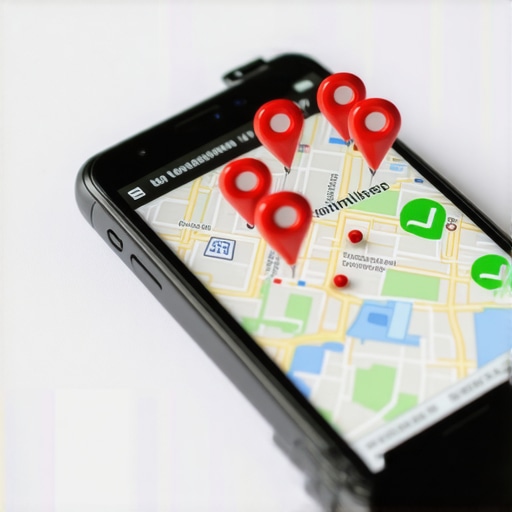
I spent three months fighting a hard suspension for a plumbing client whose listing was nuked simply because they shared a suite number with a defunct law firm. Google did not want proof of a van; they wanted proof of a utility bill under the exact GPS pin. They wanted a video walk-through showing the street sign and the office door in one continuous shot. This was not a simple clerical error. It was a spatial database conflict that required a forensic approach to local search. I see this every day. Business owners buy into cheap citation packages and wonder why their pin vanishes when a algorithm update hits. The reality of the local search ecosystem is far more granular than keywords. It is a game of proximity math and behavioral signals. If you want to survive the next shift, you must stop thinking like a marketer and start thinking like a logistics manager. The air in my office smells of old paper and the wet concrete from the construction site across the street. It is a reminder that the physical world is what Google is trying to index. Your digital footprint must match the physical reality of your storefront or your service area. If there is a gap, the algorithm will find it.
The ghost in the GPS coordinates
Google Business Profile success requires precise coordinate salience, high resolution image metadata, and consistent Point of Sale data integration. These technical signals prove to the algorithm that your business exists at a specific physical point. Most ranking failures stem from mismatched data layers that create a lack of trust in the local entity. The pin moved. It was subtle. One day the roofing company was at the center of the city; the next day it was five miles out in the digital wilderness. This happens because the algorithm calculates the centroid of a service area based on where your customers actually are when they interact with your brand. When you fix the name and address errors that confuse the system, you are essentially recalibrating the GPS for the search engine. Proximity is not a static measurement. It is a fluid calculation based on mobile device density. If fifty people search for a plumber from a specific neighborhood and your business has no historical signal there, you will not show up. You need to understand the physics of the three mile radius. It is a probability field. Every review, every photo, and every check-in expands that field. But if your foundation is built on legacy black hat footprints, the field will collapse. I have seen profiles cleaned after an amateur agency touched them, and the recovery is always slow. It is a forensic process.
“Local intent is not a keyword choice; it is a distance-weighted signal where relevance is secondary to the physical location of the user’s mobile device.” – Map Search Fundamental
Why your physical address is a liability
A physical address becomes a liability when it is associated with virtual offices, shared coworking spaces, or residential locations without proper verification. Google uses street-level imagery and utility records to verify the legitimacy of a business location. Listings that fail this check face hard suspensions that are difficult to overturn. I remember a case where a med spa lost everything because they used a suite number that technically did not exist in the city’s postal database. They were trying to get closer to a wealthy neighborhood. The algorithm flagged the discrepancy between the lease agreement and the postal record. This is why recovering a service area profile is such a technical nightmare. You are fighting against a machine that values truth over convenience. If you are a contractor, the hard suspension trap is always waiting. You must document everything. Take photos of your branded trucks. Keep your business licenses updated. The street photographer in me sees the storefront as a set of data points. The height of the sign, the color of the door, the hours posted on the glass. Google sees these too. If your online hours do not match the hours on your physical door, you are sending a signal of unreliability. This is one of the missing details that keep you out of the top 3 map pack.
Local Authority Reading List
- Diagnostic tools for stagnant rankings
- How to fix low map rankings
- The pro audit toolkit for GMB
- Documentation for fast suspension fixes
- Identifying and purging spammy backlinks
The three mile radius that determines your revenue
Local revenue is determined by the hyper-local proximity of your business to the user at the moment of search. Ranking in the map pack is a function of distance, prominence, and relevance. If your proximity signal is weak, your business will remain invisible to users who are only a few blocks away. The algorithm uses a sophisticated zooming logic. It starts at the street level and moves out to the neighborhood, then the city. If your business name looks like a list of search terms, you are already losing. Google prefers brands over keyword strings. I often transition businesses from spammy names to brands to restore their long-term health. It is a slow burn strategy. You cannot rush trust. The math is simple. If you have ten high quality reviews from people within a one mile radius, you are more relevant than a business with a hundred reviews from people across the country. This is about natural engagement signals. The algorithm tracks how many people click for directions and how many of those people actually arrive at the location. It is a closed loop. If people click but do not arrive, your ranking drops. This is why impressions are high but calls are zero in many cases. The intent is mismatched with the physical reality.
Forensic cleaning of black hat footprints
Cleaning legacy black hat local SEO footprints involves a systematic audit of old citations, the removal of toxic backlinks, and the normalization of NAP data. Many businesses inherit these issues from previous agencies that used automated tools to create thousands of low quality directory listings. These footprints act as an anchor on your current ranking potential. I use specific diagnostic tools to audit stagnant rankings and find these hidden traps. Sometimes, the problem is a single malicious script. You might need to recover from malicious code in your header before you can even think about the map pack. The algorithm is sensitive to site security. A hacked site is a local search death sentence. If your security plugin is not active, you are vulnerable. I have spent years as a map-spam investigator. I know the smell of a fake listing. It smells like a stock photo and a virtual mailbox. Google knows this too. They are looking for the grit. They want to see the dust on the shelves and the real faces of the staff. This is why reputation signals are now 30 percent more effective when they include customer-uploaded photos.
The mathematics of the top 3 map pack
Consistent top 3 placement is achieved through high frequency local engagement, category optimization, and the elimination of duplicate data. The map pack is a zero-sum game. For you to move in, someone else must move out. This requires a daily maintenance checklist that most business owners ignore. You cannot set it and forget it. You must respond to every review. You must post updates that actually convert. If your weekly posts are not converting, it is because they lack local context. Talk about the neighborhood. Mention local landmarks. This builds the spatial connection.
“Local search is the bridge between the digital intent and the physical transaction. Without trust, the bridge collapses.” – Local Search Intelligence Report
The future of proximity engineering
By 2026, the Google Maps algorithm will prioritize AI-verified video content and real-time inventory data over traditional text-based citations. The era of the static profile is ending. You will need to show the algorithm that you are open and active in real-time. This is why the 2026 algorithm shifts are so daunting for businesses that rely on old tactics. You need to optimize your categories carefully. Do not overstuff. If you are a plumber, do not try to rank for every construction keyword. Stick to your core. The simple math of ranking is about focus. If you try to be everything to everyone, you will be nothing to the algorithm. Clean your backlinks. If you have been hit by a spam update, you need to recover from the link profile damage immediately. This is the only way to restore your authority. I see businesses fail because they ignore the small things. A mismatched phone number. A typo in the street name. A missing suite number. These are the details that the logistics manager in me hates. Precision is everything. If you are ready to fix your visibility, you must fix your visibility after an update with a structured plan. No more shortcuts. No more fake addresses. Just real data for a real business.
