
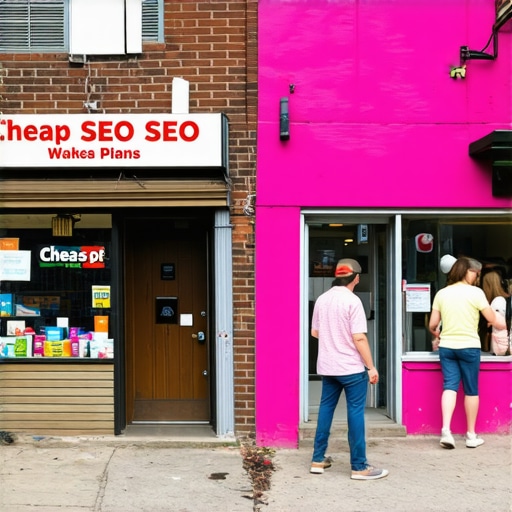
The Difference Between Cheap Local SEO Plans and Strategy That Works
I’m Robert, a Local SEO Consultant, and I’ve spent the better part of a decade watching small business owners throw their hard-earned money into a bottomless pit labeled “Affordable SEO.” It’s a cycle I see daily: a business owner realizes they aren’t showing up in the Map Pack, they get a cold call or an email promising a “Top 3 Ranking” for $99 a month, and six months later, they are $600 poorer with exactly zero new leads to show for it. In fact, they are often in a worse position than when they started.
The reality of the digital landscape is stark. The 46% Rule tells us that nearly half of all Google searches have local intent. If you aren’t visible when someone searches for “plumber near me” or “orthodontist in [City],” you effectively don’t exist. But here is the hard truth: “cheap” is often the most expensive mistake you can make. The gap between a checklist-based “plan” and a data-driven local seo strategy is the difference between a business that scales and one that stagnates. Today, we’re going to peel back the curtain on why those budget packages fail and what a strategy that actually moves the needle looks like.
The Allure of the $99 SEO Package (And Why It’s a Trap)
We’ve all seen the ads. “Complete Local SEO for $99/month!” It sounds enticing, especially for a small business operating on thin margins. These services usually operate on a “fixed monthly pricing” model, which is the first red flag. Real SEO isn’t a commodity you buy off a shelf; it’s a competitive battle for limited real estate. When you pay $99, you aren’t paying for expertise; you’re paying for a script.
These low-cost providers rely heavily on automation and “set it and forget it” tactics. They might use automated bots to submit your business information to hundreds of low-quality directories that no human has visited since 2012. While they claim this builds “citations,” Google’s algorithm has long since evolved past caring about quantity. In fact, flooding the web with low-quality google business profile seo signals can actually trigger spam filters. These agencies don’t perform deep audits; they don’t look at your competitors’ backlink profiles; they don’t analyze your local entity’s proximity. They simply run a macro and send you a generic PDF report at the end of the month that highlights “increased impressions” – a metric that means nothing if your phone isn’t ringing.
Furthermore, these cheap plans often ignore the technical health of your Google Business Profile (GBP). They might post a couple of stock photos once a month, but they aren’t optimizing for the “Proximity, Relevance, and Prominence” triad that Google uses to determine map rankings. Without a nuanced approach to google maps rank tracker data, you are essentially flying blind while your competitors use high-altitude radar.
3 Hidden Costs of “Affordable” SEO Plans
When you opt for the budget route, you aren’t just losing the monthly fee. You are incurring massive hidden costs that can take years to rectify.
- The Recovery Cost: This is the most painful one. When a cheap SEO provider uses “black hat” tactics – like buying fake reviews or using geofenced keyword stuffing – Google will eventually catch on. The Recovery Cost for a business to bounce back from a Google penalty or a hard suspension can range between $50,000 and $150,000. This includes the cost of hiring specialized consultants to file reinstatement requests and the massive loss of revenue during the 6+ months it takes to recover.
- The False Economy: Research shows that 60% of small businesses who opt for low-cost, “fixed” SEO packages end up spending significantly more on corrections later. You end up paying twice: once for the service that didn’t work, and again for a professional to clean up the mess.
- The Opportunity Cost: While you are waiting for a $99 plan to “kick in,” your competitors are capturing 100% of the local market share. Every month you spend not ranking in the top 3 is a month of lost leads, lost sales, and lost brand equity.
Many business owners believe that simply having more reviews will solve their ranking issues, but as we discuss in our guide on Why Review Count Isn’t Saving Your Falling Map Rank, the quality and velocity of those reviews matter far more than the raw number. Cheap SEO plans often try to “game” reviews, which is the fastest way to get your profile permanently removed.
What a “Strategy That Works” Actually Looks Like
A “Strategy That Works” is not a checklist; it’s a dynamic roadmap. It starts with a comprehensive google business profile audit tool analysis to identify exactly where the “leaks” are in your local authority. Are your service areas overlapping? Is your website’s local schema markup broken? Are your high-authority backlinks actually relevant to your geographic location?
Hyperlocal Content Strategy
Generic blog posts about “The Importance of Maintenance” do nothing for local SEO. A real strategy involves creating hyperlocal content that proves to Google you are an authority in a specific geographic area. This means writing about local events, partnering with other local businesses, and creating location-specific landing pages that go beyond just swapping out a city name in the H1 tag.
Signal Consistency
While the old “NAP” (Name, Address, Phone) consistency still matters, modern google business profile optimization requires signal consistency across the entire web. This includes your social signals, your mentions in local news outlets, and even the metadata in the images you upload to your profile. A real strategist ensures that every digital footprint your business leaves reinforces your location and your services.
Advanced GBP Optimization
A professional strategy utilizes every feature Google offers. This includes managing “Services” menus with precision, utilizing “Products” to showcase offerings, and maintaining a high-frequency Q&A section that uses natural language to answer common customer queries. It’s about building a robust digital entity that Google trusts implicitly. To understand the depth required here, you need more than just a basic dashboard; you need professional local seo tools that track movement at the grid level, not just at a single point in the city.
The 2026 Local Algorithm: Proximity vs. Authority
As we move toward 2026, Google’s algorithm is becoming increasingly sophisticated at filtering out “SEO tricks.” We are seeing a massive shift where Google is prioritizing real-world authority over traditional ranking factors. The “Business Name Keyword Trap” is a perfect example of this. Many cheap SEO providers will suggest adding keywords to your business name (e.g., “John Doe Plumbing – Best Plumber in Miami”). While this might provide a temporary boost, it now triggers an immediate ranking filter or a suspension because it violates Google’s terms of service.
In the coming years, proximity will always be a factor, but “Authority” will be the tie-breaker. Google is looking for “Brand Prominence.” Do people search for your business by name? Does your business have mentions on authoritative local websites? If you are relying on a cheap plan that only focuses on citations, you are going to be left behind by the 2026 algorithm updates. We’ve detailed these upcoming shifts in our analysis of 3 Signal Conflicts Causing 2026 Ranking Problems on Google. The key takeaway is that you cannot “hack” authority; you have to build it.
Another critical element is the rejection of generic backlinks. As we’ve noted in Why General Backlinks Won’t Save Your Map Rank, a link from a generic “SEO directory” is worthless compared to a link from a local chamber of commerce or a neighborhood blog. Cheap plans don’t have the budget to do the manual outreach required for these high-value links.
Why Your Current “Cheap” Service is Ghosting Your Leads
One of the most frustrating things I hear from business owners is: “My SEO company says my rankings are up, but my phone isn’t ringing.” This is the “High Impressions, Zero Calls” phenomenon. Cheap SEO plans often target “vanity keywords” – terms that are easy to rank for because nobody is actually searching for them. They might rank you #1 for “Affordable copper pipe repair in [Small Suburb],” but if that term only gets 2 searches a year, it’s useless.
A real local seo ranking tools suite will show you the “Search Intent” behind the keywords. A strategy that works focuses on “Money Keywords” – the terms that customers use when they are ready to buy. If your impressions are high but your conversions are low, your “cheap” service is likely targeting the wrong audience or your profile is failing to build trust. You can see the data-driven proof of this in our post on 4 Google Maps Analytics Metrics That Prove Competitors are Snatching Your Traffic. It’s not just about being seen; it’s about being chosen.
Cheap services also fail to address “Conversion Rate Optimization” (CRO) on your Google Business Profile. If you rank #1 but your profile has no recent photos, no owner responses to reviews, and an incomplete description, the customer will simply click on the #2 result. A comprehensive strategy treats your GBP as a high-converting landing page, not just a directory listing.
How to Vet a Local SEO Agency Before Hiring
If you are tired of the “churn and burn” agencies and want to hire a partner who actually understands local seo software and strategy, you need to ask the right questions. Don’t let them dazzle you with jargon. Use this checklist:
- Do they use a grid-based rank tracker? If they only report a single ranking for your city, they are hiding the truth. You need to see how you rank block-by-block.
- What is their approach to link building? If they say “we submit to 200 directories,” run. If they say “we identify local sponsorship opportunities and neighborhood-specific blogs,” stay.
- Do they understand Service Area Business (SAB) nuances? Ranking a business without a physical storefront requires a completely different set of tactics than a retail shop.
- How do they handle “Proximity Filters”? Ask them how they plan to expand your ranking radius beyond the immediate 1-2 miles around your office.
- Do they provide transparent, custom reporting? You should see a direct correlation between their work and your “Calls” and “Directions” metrics in the GBP dashboard.
A legitimate consultant will likely use professional-grade GBP ranking tools to show you exactly where you stand against your top three competitors. They won’t promise “instant results,” but they will provide a clear timeline for growth based on your current authority gap.
Conclusion: Investing in Local Dominance
At the end of the day, you get what you pay for. A $99 plan is a maintenance fee for a dying asset. A real google maps ranking service is an investment in a lead-generation engine that will power your business for years to come. The “Proximity, Relevance, and Prominence” triad isn’t something you can automate; it requires a deep understanding of your specific market, your competitors’ weaknesses, and the ever-changing landscape of the Google algorithm.
Stop guessing why your map rank is low. Stop letting cheap agencies “experiment” with your primary source of leads. It’s time to move from a “plan” to a “strategy.” If you’re ready to see what’s actually holding you back, start with a professional audit and implement the changes that matter.
Check out our comprehensive guide on Low Map Rank Fix: Proven Strategies to Boost Your Google Maps Visibility to begin your journey toward the top of the Map Pack. Dominating your local market isn’t about spending the least; it’s about being the most relevant, most prominent, and most trusted option in your area.
– Robert, Local SEO Consultant