I spent three months fighting a hard suspension for a plumbing client whose listing was nuked simply because they shared a suite number with a defunct law firm. Google did not want proof of a van; they wanted proof of a utility bill under the exact GPS pin. That specific, gritty reality of the local algorithm is what separates those who understand spatial data from those who think local SEO is just writing keywords in a meta tag. When you are managing fifty locations, the room for error vanishes. A single misplaced decimal in a latitude coordinate or a slight mismatch in a suite number can trigger a cascade of verification flags that take months to resolve with support teams who only speak in automated templates.
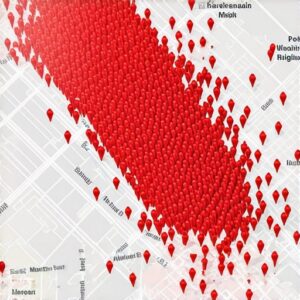
Understanding how physical coordinates translate into digital visibility requires a massive shift in how we view search engines. We must look closely at how the algorithms process spatial density. The local map pack is not a list of websites; it is a real-time database of proximity beacons. Every phone that moves through a physical space transmits behavioral signals that validate or invalidate the existence of your physical office. When you audit these locations, you are looking at the health of these signals across several coordinate grids.
“Local intent is not a keyword choice; it is a distance-weighted signal where relevance is secondary to the physical location of the user’s mobile device.” – Map Search Fundamentals
The core of local search dominance lies in finding the exact friction points in your spatial presence. If your multi-site configuration has even minor database discrepancies, search engine systems will automatically group your profiles or filter out the ones they deem redundant. This is why generic web trackers fail to show the true picture of your rankings. They measure rankings from static data centers rather than simulating the organic movement of real human searchers walking down a street with a mobile device in hand.
The hidden friction in multi-site search data
Multi-location businesses fail in map rankings because of database conflicts, overlapping service boundaries, and inconsistent address formatting that triggers internal algorithmic filters. When multiple offices operate under similar brand names within adjacent zip codes, search engines often apply a proximity filter to prevent search results from being dominated by a single entity. Understanding this algorithmic grouping is the first step toward reclaiming your map presence.
We must look closely at how search engines evaluate regional footprints. For companies managing dozens of offices, the biggest enemy is often self-cannibalization. This occurs when two distinct offices are located close enough that their target territories overlap. In these scenarios, the system selects one primary location to display while suppressing the secondary listing. To identify these hidden conflicts, specialized tracking software must measure rankings at incredibly precise increments, sometimes as close as one hundred meters apart. Without this granular map rank data, you are essentially blind to the internal filtering that is quietly hiding your physical storefronts from nearby searchers.
This is where standard digital assets often fail. If your main corporate site uses low-quality page templates, search engines struggle to connect your organic brand power to your individual local map listings. Investigating the technical health of your digital presence is vital, as explained in our guide on why your website technical health dictates your local map success, which shows the direct link between organic code crawlability and local map pack visibility. If your digital foundation is broken, no amount of citation building will lift your map pins.
How to identify hidden structural issues in your local ecosystem
To diagnose map ranking drops you must audit spatial coordinates, citation consistency across primary databases, and local review velocity to isolate the exact cause of a visibility drop. An effective multi-location audit requires cross-referencing your live Google Business Profile coordinates with your underlying structured schema data to find hidden discrepancies. This process reveals why specific locations struggle to rank even in their immediate neighborhoods.
The mathematical weight of a local review signal is highly dependent on the historical behavior of the user profile that left it. Real customer accounts have organic movement patterns; they check in at grocery stores, post photos of local landmarks, and leave reviews for businesses in a logical geographic cluster. When a profile with no local behavioral history suddenly leaves a review, search engines discount its value. To audit your brand reputation accurately, you need tools that dissect these reviewer profiles rather than simply counting the raw number of reviews. Understanding these patterns is central to managing a clean local footprint.
This audit process is especially crucial if you have recently acquired new locations or updated old listings. Many businesses inherit toxic digital footprints from previous owners without realizing it. Discovering how to properly analyze and clean up your online business directories is essential. Our detailed walkthrough on how to audit your citation history to find the spam killing your rank offers a step-by-step methodology for locating and removing these harmful records before they trigger algorithmic penalties.
Local Authority Reading List
- Find expert techniques in our guide on troubleshoot local ranking issues expert tips to recover google maps rankings.
- Understand how to resolve duplicate listings by reading how to remove duplicate business listings that are siphoning traffic.
- Discover the tools needed for large portfolios in the strategy for managing 50 local business profiles.
- Learn how to handle unexpected rankings drops after updating an office location in why your rank dropped after you updated your office address.
The math behind user proximity and search engine trust
Proximity rankings are dictated by the physical distance between the user and the coordinate centroid, modified by the historical authority score of the business profile. While you cannot change a searcher’s physical location, you can expand your listing’s radius of influence by cleaning up database discrepancies and building localized entity connections. This balance of distance and trust determines your physical reach.
When a searcher inputs a query like plumbing repair, the search engine constructs a spatial query area. The system immediately calculates the distance from the searcher’s mobile device coordinates to the nearest verified business pins. If your business has high authority, your ranking boundary expands, allowing you to show up for users who are miles away. However, if your business profile suffers from directory inconsistencies, your visibility boundary shrinks. In extreme cases of profile conflict, your business pin may only appear when a user is standing directly inside your physical office lobby.
To stop this shrinkage, you must audit the accuracy of your information across all primary data aggregators. Incorrect phone numbers or slight variations in your business name confuse the algorithms, leading to a loss of trust. If you are struggling with outdated directories, you can find a straightforward solution in our manual on the direct fix for incorrect store hours and phone numbers online, which walks through the process of aligning your basic contact details across the web.
The real danger of using generic tracking tools
Generic search engine optimization tools fail at tracking map packs because they measure rankings from central servers instead of simulating hyper-local mobile search locations. To truly audit multi-location rankings, you must use software specifically built to measure map grids at varying distances from your physical storefronts. This ensures your data reflects the actual experience of nearby customers trying to find your services.
Using a standard keyword tracker to manage local search is like using a global map to find a specific house key. These global tools report a single average rank for an entire city, hiding the fact that you might rank first directly on your block but vanish completely two blocks away. A true local audit requires a grid-based visualization system that queries search results from dozens of specific coordinate points around your store. This allows you to pinpoint the exact direction where your authority drops, showing you where your local competitors are starting to win the proximity battle.
“Proximity is a dynamic variable that changes with population density; a business in a major metropolis has a much smaller maximum ranking radius than a business in a rural valley.” – Spatial Search Research
For brands with complex physical footprints, choosing the wrong software can lead to wasted budgets and incorrect business decisions. Many agencies purchase basic software packages that lack the tracking depth required for Google Business Profiles. If you are looking for specialized auditing tools, our analysis of the problem with buying generic local seo software for gbp breaks down why customized local tracking systems are necessary for accurate spatial diagnostics.
How to clean up directory histories to restore search trust
Cleaning up historical directory spam requires systematically identifying incorrect listings on old web directories and submitting manual removals to restore data alignment. Search engines continuously crawl the entire web to verify the accuracy of the information in their maps database. When they find old, conflicting records from previous marketing campaigns, they lower your visibility score to protect user experience.
Many business owners do not realize that past search engine optimization campaigns often left behind hundreds of low-quality citations. These old listings acted like anchors, dragging down your modern map rankings. A thorough cleanup involves auditing these old web directories, claiming the stray listings, and formatting them to match your current, verified Google Business Profile. This cleanup is far more effective for long-term growth than simply building new backlinks to a broken foundation.
This deep data cleansing process is particularly critical for service area businesses that do not have a public storefront. If you want to systematically purge these old directory mistakes, you can follow the steps outlined in our guide on the step-by-step process for purging historic citation spam, which explains how to clean your business history without losing your established authority.
A structured approach to resolving profile suspensions
Recovering from a profile suspension requires identifying the specific guidelines violation, gathering physical proof of your business operations, and submitting a clear appeal. Google regularly suspends profiles that appear to share physical addresses or display inconsistent business names. Navigating this recovery process requires extreme attention to detail and clear, unassailable physical evidence of your office operations.
When a listing is suspended, many business owners panic and create a second profile, which only worsens the problem by creating a duplicate conflict. The correct path is to audit your business details against current guidelines, correct any errors, and submit a single, comprehensive reinstatement request. This request should include clear photos of your permanent office signage, official utility bills, and business registration documents that show your exact address.
If you find yourself facing an active suspension or a sudden manual flag, you must act quickly but carefully. For a detailed breakdown of the recovery process, refer to our comprehensive guide on how to recover a stolen or suspended business listing, which provides the precise steps needed to restore your map pins and regain your local search visibility.