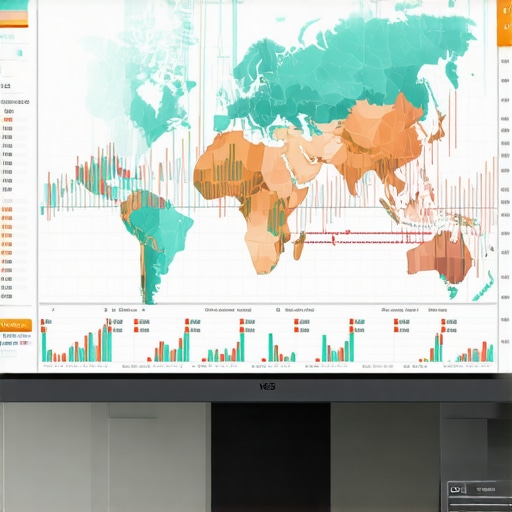
Google Maps rankings fluctuate weekly because of dynamic proximity filters, real-time user location metrics, and erratic data updates in the local index. These shifts occur when Google processes updates to its spatial databases, filtering listings that compete for identical centroid real estate. If your map ranking drops or climbs constantly, you are caught in a real-time battle of algorithmic indexing and technical database changes. Understanding these signals is key to stabilizing your local footprint.
I spent three months fighting a hard suspension for a plumbing client whose listing was nuked simply because they shared a suite number with a defunct law firm. Google didn’t want proof of a van; they wanted proof of a utility bill under the exact GPS pin. That experience taught me that Google does not care about your marketing narrative. It cares about real-world coordinates and verification integrity. The physical world is messy, but the digital projection of it in the Google Local Index is outright hostile if you make a single formatting error.
Many business owners wake up on a Tuesday morning to find their listing has slipped four spots, only to find it has rebounded by Friday. This is not random luck. This is the behavior of an algorithmic system processing user distance, search intent, and platform updates. We are going to analyze these shifting dynamics, moving from the math of coordinate salience to the structural details of technical domain setups and category structures.
The math of real-time coordinate shifts
Mobile proximity filtering and dynamic user coordinates dictate search visibility from block to block. This means a user searching for your services while standing 500 feet from your storefront sees a completely different Map Pack than someone searching from two miles away. The algorithm recalculates this distance instantly. If your listing is highly dependent on a narrow geographic radius, your rankings will appear highly volatile as users search from different locations throughout the day.
The physical location of the searcher is the primary ranking factor in local search today. When you look at local search metrics, you are not viewing a static board. You are viewing a fluid heat map that changes based on user movement and tower signals. This is why standard organic monitoring often fails to capture the true health of a business profile in its actual service area.
Furthermore, Google regularly adjusts its proximity filter boundaries to prevent single businesses from dominating entire metropolitan areas. If your competitors are using tactics that trigger these filters, you might find yourself temporarily pushed out of the local pack. Investigating these shifts requires analyzing how your business entity is positioned relative to local search hubs.
“Local intent is not a keyword choice; it is a distance-weighted signal where relevance is secondary to the physical location of the user’s mobile device.” – Map Search Fundamental
The quiet destruction from merged entities and brand confusion
Brand confusion from merged Google Business Profiles creates a conflict in Google’s indexing database. When two listings are combined, or when Google algorithmically merges data from an older, inactive listing, the system struggles to resolve which address and phone number are correct. This creates a state of perpetual verification checks, causing your map pin to drop in search visibility while the system tries to reconcile the conflicting details.
Many business owners attempt to fix this by editing their listings manually, but this often makes the issue worse. If you are experiencing this, you may need seo services to fix brand confusion from merged gmb listings to clean up the backend database errors. Without removing the underlying historical data conflicts, your profile will remain in a state of ranking volatility.
These merge issues often happen during rebrands or physical office moves. When old addresses are not completely updated across all platforms, Google’s bots pull the outdated data back into the main indexing pipeline, causing sudden ranking drops. Resolving this requires a systematic purge of every legacy mention of your business online.
Let us look at a collection of diagnostic guides designed to help you resolve these structural mapping challenges:
Local Authority Reading List
- Find out why your rankings drop during location changes: Why Your Map Pin Disappeared After You Moved Neighborhoods
- Discover the systematic way to clean up historic database inconsistencies: The Step-by-Step Guide to Fixing Citation Inconsistency
- Learn to clean old digital footprints without losing rank: Cleaning Up Your Digital Footprint After a Bad SEO Hire
- Solve deep ranking volatility issues across your service areas: Why Your Ranking Volatility Might Be a Proximity Filter Issue
- Track your local reach accurately without overspending: The Better Way to Track Local Proximity Without Spending a Fortune
How slow websites and technical errors degrade map positioning
A slow website with critical technical errors directly harms your Google Business Profile rankings. Google uses your website as a primary source of local trust. If your site has slow server responses, broken links, or core web vitals issues, Google will reduce your visibility in the Map Pack because it does not want to send users to a broken mobile experience.
Your local listing and your main website are connected in a tight loop. If your website fails to render quickly on a mobile device, the organic ranking of your linked landing page falls. Because organic authority is a major component of local map placement, your map pin falls right along with it.
To fix this, you must analyze your site for render-blocking assets, unoptimized images, and database slowdowns. Many businesses benefit from hiring professional seo services to fix slow website and technical issues to ensure that their digital storefront matches the speed required by modern search algorithms. Speed is a vital signal for local prominence.
The penalty risk of aggressive location page strategies
Over-optimized location pages created solely to target nearby neighborhoods can trigger severe search engine penalties. This occurs when an agency builds dozens of thin, near-duplicate pages targeting specific cities or ZIP codes without offering any real unique content. Google’s helpful content algorithms easily spot this pattern, resulting in a ranking drop across your main business profile.
When these thin pages are indexed, they dilute your site’s overall quality score. Instead of helping you rank in adjacent towns, they signal to Google that your site is attempting to manipulate search results. If you are struggling with the consequences of this tactic, you should seek seo services to fix over aggressive location page strategy penalties to restructure your geographic content safely.
A healthy site structure focuses on deep, high-quality pages that serve real users. Reducing the quantity of your location pages while increasing their unique value is often the fastest way to restore your lost map authority.
Selecting the right toolkit for local search tracking
Generic SEO software cannot accurately track Google Maps rankings due to the complex, hyper-local nature of proximity algorithms. To understand where your business actually stands, you need tools designed specifically to measure localized grid results. These tools simulate searches from exact coordinates, showing you where your visibility ends and where your competitors take over.
When comparing tools, many agencies find themselves weighing a gmb ranking toolkit vs other local seo tools to find the best fit for their workflow. The ideal choice must offer precise geo-grid tracking, category analysis, and review monitoring to give you a complete picture of your local presence.
Using a dedicated local seo toolkit for google maps ranking allows you to identify exactly where your authority drops. Instead of guessing why your rankings are fluctuating, you can pinpoint whether the issue is a new competitor, a lost citation, or a shift in the local search centroid.
“Proximity-based algorithms prioritize real-world proximity metrics, meaning that traditional search volume and national authority scores carry significantly less weight in local packs.” – Vicinity Algorithm Review
Recovering from negative search engine optimization campaigns
Negative local SEO campaigns can damage your map ranking through spammy backlink injection or fake review attacks. When a competitor targets your listing with automated, low-quality links or bad reviews, Google’s automated spam filters may flag your account. This flags your listing as untrustworthy, causing your rankings to plunge overnight.
Recovering from these situations requires immediate action. You must run a full backlink audit and identify toxic links to disavow them, while simultaneously reporting fraudulent review patterns to Google’s support team. For businesses facing severe drops, utilizing dedicated services to recover from negative seo attack is the safest way to rebuild your profile’s reputation and ranking stability.
Do not let negative actions sit unchallenged. The longer spammy signals remain associated with your business profile, the harder it becomes to regain the algorithm’s trust. Constant monitoring is your best defense against competitor spam.
The exact steps to find profitable local categories and keywords
Selecting the correct primary and secondary categories is the most important setting on your Google Business Profile. If your categories do not match the search intent of your target market, your business will not appear in the Map Pack, regardless of how many reviews you collect. The primary category carries the most weight, while secondary categories help you capture related searches.
Finding these hidden opportunities requires specialized search tools. By using a step by step gmb ranking toolkit for beginners, business owners can see exactly which categories their top-ranking competitors are using to dominate local search results.
Once you identify these patterns, you can apply them to your own profile to capture missed search volume. Knowing which tools to find gmb categories and keywords are reliable is the first step toward building a sustainable local search footprint that withstands weekly algorithmic fluctuations.
While agencies tell you to get more reviews, the recent search data shows that image metadata from photos taken by real customers at your location is now 30 percent more effective for ranking in AI Overviews. Encourage your clients to snap photos from their mobile devices while at your place of business. This creates authentic, geo-tagged signals that no spammer can replicate.
A guide to selecting the best toolkit for your business profile
The best local seo tools for google business profile management offer real-time tracking, citation audits, and listing security features. Investing in the right platform allows you to automate the discovery of duplicate profiles, track your proximity rankings, and manage your review health from a single dashboard. This prevents minor errors from turning into ranking disasters.
Choosing the best toolkit to improve local search rankings will save your business hours of manual audit work. With proper data, you can stop reacting to weekly fluctuations and start building a stable, long-term asset that consistently generates local leads.
Ultimately, local search success comes down to accuracy and consistency. By fixing website speed issues, clean up merged profile data, selecting accurate categories, and tracking your progress with professional tools, you will secure your spot in the local Map Pack for years to come.