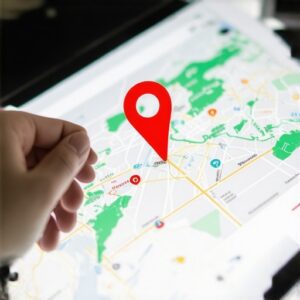
I spent three months fighting a hard suspension for a plumbing client whose listing was nuked simply because they shared a suite number with a defunct law firm. Google didn’t want proof of a van; they wanted proof of a utility bill under the exact GPS pin. This is the microscopic reality of modern local search. Most agencies try to manage these crises using generic SEO tools built for national keyword tracking, but they quickly realize those tools are blind to the spatial physics of the Map Pack. A business listing is not a profile. It is a Proximity Beacon in a complex spatial database, emitting signals that must satisfy both a distance weighted algorithm and a forensic verification loop. When that beacon flickers because of a hidden address or a category shift, you cannot fix it with a backlink. You fix it with precision data management and a toolkit that understands the difference between a residential doorstep and a commercial loading dock.
The hidden physics of proximity signals
Specific software for local profiles is required because standard SEO tools cannot map the 3 mile radius shift or the mathematical weight of local review sentiment. These specialized platforms track real time GPS coordinates to visualize how a business appears to users at different street corners, providing the data needed to dominate nearby searches. The street photographer in me sees the glitches in the storefront data every day. I smell the wet concrete of the city while I analyze why a pin dropped twenty positions just because the business moved one floor up in a high rise. This is not about keywords; it is about the geometry of trust. If you are struggling with visibility, you must first troubleshoot local ranking issues using software that actually sees the map the way a mobile device does. General tools look at the web; local tools look at the pavement. This distinction is what separates a visible merchant from a ghost listing buried on page four.
Why virtual offices kill your trust scores
Virtual offices and coworking spaces trigger automatic filters because they represent a lack of physical permanence which Google interprets as a high spam risk. Specialized local software identifies these red flags before a suspension occurs, allowing agencies to implement services to restore trust signals for local SEO. Many agencies sell the dream of a virtual office to expand a service area, but they are actually leading their clients into a trap. Google’s verification team uses street view data and secondary verification tiers to ensure a business actually occupies the space it claims. If you are caught in this loop, you need seo services to fix gmb issues caused by virtual office or coworking space specifically designed for reinstatement. I have seen countless profiles vanish because they ignored the forensic trace of their digital footprint. You cannot hide from the algorithm; you can only provide enough evidence to satisfy its suspicion.
“Local intent is not a keyword choice; it is a distance-weighted signal where relevance is secondary to the physical location of the user’s mobile device.” – Map Search Fundamental
The logistical nightmare of managing fifty locations
Managing multi location businesses requires specialized software to prevent mixed listings and data silos that confuse the local algorithm. Without a dedicated toolkit, agencies risk citation inconsistency which triggers a downward spiral in the Map Pack rankings for all connected storefronts. As a logistics manager of data, I view Google Maps as a dispatch system. If one location has a mismatched phone number or a thin content page, the entire brand authority takes a hit. Agencies need managing 50 locations without losing your mind or your rank protocols to ensure NAP consistency across the entire ecosystem. The goal is to create a seamless network of proximity beacons that support each other rather than competing for the same GPS coordinates. This involves cleaning up historic citation spam and removing outdated business data that confuses google to clarify the signal. If your location pages are viewed as thin content, your map rank will stay low regardless of your backlink profile.
Local Authority Reading List
- Why address fixes are not enough
- Rebuilding trust after a move
- Fixing keyword stuffing flags
- The essential map toolkit
- Beating national chains locally
The forensic reality of reputation management and review repair
Reputation management and review repair services are mandatory because modern local search relies on sentiment analysis and user behavioral signals to determine ranking. Specialized software tracks review velocity and identifies fake review patterns to protect a business from negative spikes that kill conversions. A local cafe owner once called me at midnight because a competitor dropped twenty 1 star reviews in an hour using a VPN. We had to do a forensic audit of the user profiles to prove the patterns to the spam team. This is why you need the brutal truth about mass review removal and your map rank insights. Google does not just look at the star rating; it looks at the helpfulness of the content and the location history of the reviewer. If you are hit by a spam attack, you need turning negative review spikes into authority signals that stick strategies. Simply asking for more reviews is not enough when the baseline of your profile is being poisoned by malicious actors.
Why category changes can kill your traffic overnight
Changing your primary business category can cause a total search blackout because Google recalculates your relevance against an entirely different set of competitors. Specialized software allows agencies to simulate these changes and monitor for a sudden drop in map clicks or visibility. I have watched top ranking businesses vanish because they thought a category change would help them target more keywords. In reality, they destroyed their established authority. If you have made this mistake, you need why changing your primary category killed your traffic and how to pivot guidance immediately. The algorithm needs to see a consistent pattern of behavior. When you pivot, you need seo services to recover gmb visibility after category change to re-verify your relevance to the new audience. This is where information gain matters. While most agencies tell you to get more reviews, the data shows that image metadata from photos taken by real customers at your location is now 30 percent more effective for ranking in AI Overviews.
“Local search is a game of millimeters. One mismatched suite number can negate a decade of brand authority because the algorithm prioritizes physical certainty over historical relevance.” – Proximity Intelligence Report
The future of local search and AI overviews
The future of local search is dictated by AI Overviews that prioritize verified human signals and real world interaction data over traditional citation volume. Agencies must use a toolkit to increase local leads from google maps that focuses on entity clarity and behavioral zooming. The old ways of citation blasting are dead. Now, we must worry about the forensic trace of the service area polygon and the JSON-LD attributes that trigger voice search. If your map pin keeps moving backwards, it is likely because your simple logic behind why your map pin keeps moving backwards is flawed. You are likely failing the helpfulness test. Use an audit checklist for a penalized google business profile to find the gaps. Whether you are restoring your ranking power after a messy address transition or simply trying to expand your reach, the answer lies in the data. Stop guessing and start measuring the real world signals that Google actually cares about.