The concrete outside my window is wet with a midnight rain, and the fluorescent flicker of a nearby storefront sign reminds me of the glitches I see in the local algorithm every day. I remember a specific Tuesday at 12:45 AM when a local cafe owner called me in a panic because their ranking had flatlined. Within an hour, a competitor had dropped twenty 1-star reviews using a VPN infrastructure. We had to do a forensic audit of those user profiles to prove the patterns to the spam team. It was not an algorithm update; it was a targeted hit. My job is to find those glitches and fix them before the business bleeds out. Whether you are dealing with a broad core update or a specific manual filter, the solution starts with understanding the mathematical logic of the Map Pack.
The invisible line between an algorithm update and a manual spam filter
Determining if a ranking drop is caused by a Google core update or a spam filter requires analyzing whether the volatility affects only the Map Pack or the entire search engine results page. A **core update** typically shifts the weight of **relevance and authority**, while a **spam filter** targets **NAP inconsistencies**, **keyword stuffing**, and **fraudulent review patterns**. Distinguishing between these two is the first step toward recovery. When an update hits, Google is essentially recalibrating how it values signals like proximity and prominence. When a spam filter hits, Google is telling you it no longer trusts your data. You can start by using an audit checklist for diagnosing a map pack visibility loss to see where the fracture started. The math of the local algorithm is different from organic search. It relies on a three-way intersection of relevance, distance, and prominence. If your prominence score drops but your distance remains the same, you have likely been caught in a relevance filter or a spam check. This is where [how we fixed a google business profile that suddenly stopped ranking](https://whyismymapranklow.com/how-we-fixed-a-google-business-profile-that-suddenly-stopped-ranking) becomes a vital case study for your own situation. It is never a single factor. It is a weighted average of hundreds of signals including your website speed, citation accuracy, and the behavioral data of users who click your pin.
“Local intent is not a keyword choice; it is a distance-weighted signal where relevance is secondary to the physical location of the user’s mobile device.” – Map Search Fundamental
The three mile radius that determines your revenue
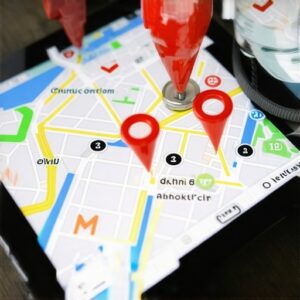
Your proximity radius is a fluid boundary where GPS coordinate salience and user density dictate which businesses appear in the top three results for a local query. Google uses **coordinate salience** to match the **user’s mobile location** with the **business centroid**, creating a **proximity filter** that suppresses listings too far from the search epicenter. Many owners find that their [business pin might be ghosted because of this one update error](https://whyismymapranklow.com/your-business-pin-might-be-ghosted-because-of-this-one-update-error) related to how their service area is defined. The math of proximity is brutal. If you are a plumber and you are three point five miles away from the user, but a competitor is two point eight miles away with similar authority, you lose. This is why [why being the closest shop doesnt guarantee a map pack spot](https://whyismymapranklow.com/why-being-the-closest-shop-doesnt-guarantee-a-map-pack-spot) is such a common point of confusion for local merchants. You have to overcome that distance gap with localized authority signals. This includes getting reviews from users whose own GPS history shows they were actually at your location. Google knows if a reviewer has never set foot in your shop because they track the coordinate history of the mobile device. [IMAGE_PLACEHOLDER_1]
Local Authority Reading List
- How to fix low map rankings and dominate local search results
- The business name keyword trap that triggers an immediate ranking filter
- Why your service area business is still missing from local search results
- 4 hidden ranking signals that matter way more than your review count
- How to optimize your business profile categories without getting flagged
Clearing the fog of merged GMB listings and brand confusion
Brand confusion from merged GMB listings occurs when Google’s algorithm mistakenly combines two distinct business profiles due to shared addresses, phone numbers, or similar names. Solving this requires **unmerging the CID records**, updating **NAP data**, and providing **unique photo evidence** of the storefront to re-establish **individual entity authority**. This is where you need specialized **seo services to fix brand confusion from merged gmb listings** because a simple support ticket rarely works. The Street Photographer in me sees the glitch where one business’s reviews start showing up on another’s profile. It is a sign of a high-level data conflict. You might need to look into [3 name and address errors that confuse the google maps algorithm](https://whyismymapranklow.com/3-name-and-address-errors-that-confuse-the-google-maps-algorithm) to see if you have accidentally triggered a merger. When listings merge, your rankings often drop because the algorithm no longer knows which category to prioritize. Are you a law firm or the plumbing supply shop that used to be in Suite B? If the data is messy, Google hides both. We use **tools to find gmb categories and keywords** that were previously associated with the ghost listing to purge them from your current profile. This cleanup is essential for [how to normalize your map rankings after a business name penalty](https://whyismymapranklow.com/how-to-normalize-your-map-rankings-after-a-business-name-penalty) or a merger event.
The forensic traces of review extortion and fake engagement
Review patterns that show sudden spikes in negative sentiment from accounts with no local history are the primary indicators of review extortion or competitor spam. Protecting your rank involves **flagging suspicious reviews**, providing **IP and device fingerprints** to Google, and reinforcing your profile with **natural engagement signals** from verified customers. If you have been hit, you need to understand [the natural way to get more reviews without triggering a suspension](https://whyismymapranklow.com/the-natural-way-to-get-more-reviews-without-triggering-a-suspension) to dilute the damage. I have seen cafes nearly go under because of a single night of bot-driven 1-star reviews. The Google spam team looks for the forensic trace of the user. Did they use a VPN? Is their account only two days old? Have they reviewed twenty other businesses in three different countries in the last hour? These are the questions that define your recovery. Using a **local seo toolkit for google maps ranking** allows you to monitor these spikes in real-time. You should also check [7 reputation signals that keep your local business stuck below the top 3](https://whyismymapranklow.com/7-reputation-signals-that-keep-your-local-business-stuck-below-the-top-3) to ensure you aren’t fighting a losing battle against bad data.
“A merchant’s online authority is a composite of localized citations, behavioral click-through data, and the geometric proximity to the query centroid.” – Proximity Logic Whitepaper
Why your slow website is killing your mobile proximity rank
Mobile page speed and technical health are critical local ranking factors because Google prioritizes businesses that offer a fast, reliable user experience for customers on the go. Improving **Core Web Vitals**, optimizing **image sizes**, and fixing **broken redirects** are the core tasks for **seo services to fix slow website and technical issues** in a local context. If your site takes five seconds to load on a 4G connection, the user will bounce back to the map. Google sees that bounce as a signal that your business is not the best answer. This leads to a drop in the Map Pack even if your address is perfect. You might need to [troubleshoot local ranking issues expert tips to recover google maps rankings](https://whyismymapranklow.com/troubleshoot-local-ranking-issues-expert-tips-to-recover-google-maps-rankings) to find the hidden technical debt. A fast site is a trust signal. It tells the search engine that you are a professional operation. This is especially true for mobile users who are looking for immediate directions or a phone number. If they can’t find it because your site is frozen, you lose the lead and the rank.
The mathematical reality of NAP inconsistencies
NAP inconsistencies create data conflicts that lower Google’s confidence in your business location, leading to a significant decrease in map visibility. Standardizing your **Name, Address, and Phone number** across all **Tier 1 directories** and your website’s **LocalBusiness Schema** is the primary function of **local seo services to fix nap inconsistencies**. Even a small typo, like writing Street instead of St, can sometimes cause a tiny fracture in your authority. I have seen businesses lose their top spot because of an old phone number on a forgotten directory. This is why you need **local seo services to clean up old or closed locations** that might still be floating around the web. These ghost listings compete with your current profile for authority. Use a [process for vetting new backlinks to avoid toxic profile growth](https://whyismymapranklow.com/a-process-for-vetting-new-backlinks-to-avoid-toxic-profile-growth) to ensure every new signal you build is clean and consistent. If you find your rank is stuck, it might be due to [5 citation errors we found during a routine local seo audit](https://whyismymapranklow.com/5-citation-errors-we-found-during-a-routine-local-seo-audit) that are quietly draining your power.
How to build a recovery toolkit that actually works
A robust local SEO recovery toolkit must include category research tools, citation scanners, and a direct line to Google Business Profile support documentation. Utilizing a **how to improve google business profile ranking toolkit** involves auditing your **primary categories**, analyzing **competitor image metadata**, and cleaning up **over-optimized anchor text** that could trigger a filter. If you have been hit by a manual action, you will need **seo services to recover from google penalty** by purging low-quality links and AI-generated fluff. Sometimes you need **seo services to clean up ai generated spam content penalties** if your blog has been used to house thin, automated text. Recovery is a slow burn. You have to prove to the algorithm that you are a real person running a real shop. This involves [getting your home based business back on google after a ban](https://whyismymapranklow.com/getting-your-home-based-business-back-on-google-after-a-ban) or providing utility bills and storefront photos for verification. If you have hidden your address and lost traffic, you need **seo services to recover impressions after hiding business address** to re-calibrate your service area polygons. Every detail matters when you are fighting for that top three spot. The glitch is always there, but with the right data, you can override it.