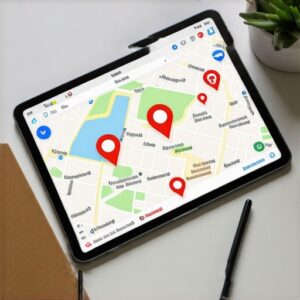
I remember the smell of wet concrete outside a small plumbing office in a strip mall where the digital ghost of a defunct law firm still lived in the GPS data. I spent three months fighting a hard suspension for a plumbing client whose listing was nuked simply because they shared a suite number with that dead firm. Google did not want proof of a van; they wanted proof of a utility bill under the exact GPS pin, showing the physical reality of the business in a way that stock photos never could. This is the world of local search, where a single pixel of misalignment in a municipal database can vanish a million dollar revenue stream overnight. When the algorithm updates, it is not just changing a ranking; it is recalibrating the spatial trust it has in your physical presence.
The forensic trace of a wiped listing
Rebuilding local traffic requires a forensic audit of the Google Business Profile to identify if the drop was a ranking shift or a trust penalty. You must analyze the specific latitude and longitude decimals where the scraper identified a conflict between your utility bill scan and the digital footprint. The first step is always identifying the nature of the loss. If your pin is still live but your visibility is gone, you are dealing with a proximity or category weighting change. If the pin is gone, you are in the world of reinstatements. Use the audit checklist for diagnosing a map pack visibility loss to see if your coordinates still align with the centroid of your target market. I have seen listings drop because the owner changed a phone number in the secondary verification tier, triggering an immediate trust score collapse. This is why the reinstatement blueprint for service area businesses facing hard suspension is vital for anyone who has lost their primary lead source.
“Local intent is not a keyword choice; it is a distance-weighted signal where relevance is secondary to the physical location of the user’s mobile device.” – Map Search Fundamental
The physics of the three mile radius shift
The proximity algorithm often shrinks the effective ranking radius during core updates to combat service area spam and virtual offices. Businesses that once ranked across an entire county might find themselves restricted to a tight three mile circle around their verified physical address or their primary service center. This shrinking radius is a defensive move by the search engine. To combat this, you need to prove local engagement through real human interactions. This means focusing on 3 natural engagement signals that move your business pin faster such as navigation requests and high dwell times on your profile. If you have been over-optimizing your name, you might need to understand why your business name should not look like a list of search terms because the algorithm now penalizes keyword stuffing with surgical precision.
Local Authority Reading List
- How to fix low map rankings and dominate local search results
- The simple math behind ranking in the top 3 map pack consistently
- Software that actually helps you move into the top 3 map pack
- How to report competitor GMB spam without getting flagged yourself
Recovering from the category change penalty
Category dilution occurs when a business selects too many secondary categories that do not align with the primary service being searched for in the local pack. After a major update, Google often tightens the relevance threshold, meaning that a plumber who also lists remodeling might lose ranking for both. You need to be precise. I often use how we found the best primary categories using specific search tools to identify the exact signal that competitors are using to stay afloat. If you recently changed your primary category and saw a drop, you are likely suffering from a category change penalty. Understanding seo services to recover gmb visibility after category change is the only way to reset the algorithm’s understanding of your business model. Do not guess with your categories; the math of the local justification trigger depends on it.
Cleaning the digital concrete of toxic links
Toxic backlink profiles are the silent killers of local rankings because they erode the authority of the website that supports the map listing. When a local business is hit by a spam update, it is usually because their link profile is flooded with low quality directories or international redirects. I have found that why deleting junk links is often better than building new ones is a lesson most owners learn too late. You must perform a forensic purge. Use how to identify and purge spammy backlinks without losing authority to clean up the mess left by amateur agencies. If your site was hacked, you might even need to follow steps to clean a website after a japanese keyword hack to prevent the map pin from being permanently blacklisted by the security filters.
“A business listing is a proximity beacon in a spatial database where the forensic trace of NAP consistency determines the validity of the entity.” – Location Intelligence Whitepaper
The ghost in the GPS coordinates
Conflicting address data across the web creates a fragmented entity that the local algorithm cannot verify with confidence. Even a minor difference in how a suite number is written can cause the proximity engine to de-prioritize your listing in favor of a competitor with cleaner data. This is why why fragmented business data is the number one reason you do not rank is the most common diagnosis I give. You must unify your presence. Look at the simple fix for conflicting business addresses and phone numbers to start the repair. If you are managing multiple storefronts, how to standardize local seo across fifty different shop locations provides the logistical framework needed to maintain consistency at scale. The pin must be an immovable fact, not a guess based on old data. [image_placeholder]