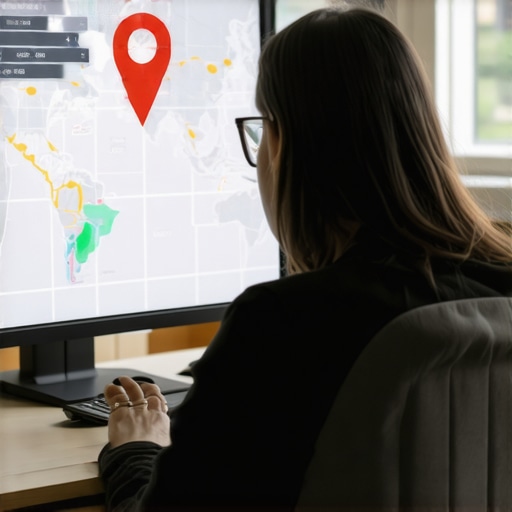
The pixels on the screen looked wrong before the email even arrived. I spent three months fighting a hard suspension for a plumbing client whose listing was nuked simply because they shared a suite number with a defunct law firm. Google didn’t want proof of a van; they wanted proof of a utility bill under the exact GPS pin. The air in that office smelled like wet concrete and desperation. This is the reality of the local search ecosystem where a single data mismatch can vaporize a decade of growth. A manual action is not a suggestion. It is an evidentiary trial where you are guilty until the metadata proves otherwise. You need to understand the forensics of proximity and the math of the map pack to survive. My job is to see the glitches before they become catastrophes.
The day the map went dark
A manual action on your Google Business Profile occurs when a human reviewer determines your listing violates specific quality guidelines. Recovery requires a formal appeal backed by verifiable evidence such as utility bills, business licenses, and permanent signage that matches your digital footprint across all authoritative local directories. This process is grueling because the algorithm has flagged you as a risk. Often, you might be identifying if your profile has a hidden manual action by looking at your sudden lack of impressions rather than waiting for an email. When the pin vanishes, it is usually because the trust bridge between your physical location and your digital data has collapsed. This is why getting your local business back on track involves more than just clicking a button. You are entering a litigation phase with a search engine that values spatial accuracy above all else. Most owners panic and try to change everything at once. That is a mistake. You must be precise. You must be forensic. If you have been flagged for keyword stuffing, the fix starts with a name change back to your legal entity. There is no room for fluff when the trust score is zero.
“Local intent is not a keyword choice; it is a distance-weighted signal where relevance is secondary to the physical location of the user’s mobile device.” – Map Search Fundamental
Why your physical address is a liability
Physical addresses become liabilities when they are associated with virtual offices, shared workspaces without distinct signage, or residential locations that violate service area business protocols. Google uses street view imagery and third party data to verify that your business actually exists at the specific latitude and longitude coordinates provided. The centroid of a city is a crowded place. If you are using keyword stuffing in your name to win that centroid, you are painting a target on your back. I have seen listings deleted because a street photographer for Google noticed the lobby directory did not list the business name in suite 402. This is why fixing your address is only the first step. You must also consider how your multi-location maps strategy might be creating contradictory data. If one database says you are on Main Street and another says you moved to Elm, the manual reviewer will see a trust gap. They do not have time to guess which one is right. They simply hit the suspend button and move to the next file. This is the brutal efficiency of the map pack.
The forensics of a hard suspension
A hard suspension removes your listing and all associated reviews from search results, requiring a complete audit of your digital presence before filing a reinstatement request. You must document your physical storefront with video evidence, including the surrounding street signs and the interior of your operational space. This is not about being clever. It is about being undeniable. When you are reversing a local search penalty, you are basically building a court case. I often tell clients that their toolkit for diagnosing a drop must include high resolution photos of their business license. If you have been caught using old black hat strategies, you need to scrub every mention of those fake addresses from the web. You cannot leave a breadcrumb trail of lies. The reviewer will find it. They have tools that scan the history of your domain and your map pin. If they see you moved five times in two years, they will suspect fraud. You need restoring authority after an address change to be your primary focus. The goal is to prove you are a permanent, helpful part of the local community. The machine hates transients.
Local Authority Reading List
- Flagged Profile Solutions
- Expanding Local Reach
- Over-Optimization Fixes
- Manual Penalty Recovery
- GMB Audit Checklist
Proof that exists beyond the digital screen
Verification evidence must consist of unedited video walk-throughs and scanned official documents that prove the business is legally registered and physically present at the claimed location. Google requires seeing your tools, your branded vehicles, and your permanent signage to confirm you are a legitimate service provider. In the age of AI, the human reviewer wants to see the grit. They want to see the dust on the desk. This is why focusing on real human signals is the only way to win an appeal. If you are handling a sudden drop in map rank, check your website’s footer first. Does the address match the pin exactly. Even a missing suite number can trigger a flag. I have helped businesses update their pin location without getting stuck in a loop by ensuring their secretary of state filing was updated first. You cannot skip steps. The algorithm is a sequence of logic gates. If you fail gate one, you never get to gate two. This is especially true for recovering visibility after a category change. If you change from a plumber to an HVAC contractor, you better have the licenses to back it up. The map is a database of facts, not a playground for marketers.
“Relevance is determined by the proximity of the entity to the user, but authority is determined by the consistency of the entity’s data across the global graph.” – Location Intelligence Whitepaper
How to talk to the machine without sounding like one
Appealing a manual action requires a concise, factual narrative that acknowledges the specific violation and provides documented proof of the correction. Avoid emotional pleas or generic excuses, as reviewers prioritize clear evidence and verifiable data over subjective explanations of business hardship. When you are appealing without sounding like a robot, you provide a bulleted list of facts. Fact one: The business name has been updated to match the legal registration. Fact two: The address has been verified with a new utility bill attached. Fact three: All duplicate listings have been merged. This clarity is what recovery services use to succeed. They don’t beg for mercy; they provide proof. If you are turning around a manual penalty, speed is your enemy if it leads to mistakes. Take the time to clean up your data everywhere else first. If Yelp, Bing, and Apple Maps still have your old, spammy name, Google will see the inconsistency. They will assume you are still trying to game the system. You have to be clean everywhere. This is the cost of entry in the modern map pack. You are not just managing a profile; you are managing a digital identity that must be beyond reproach.
The three mile radius that determines your revenue
Proximity is the strongest ranking factor in local search, meaning your business will primarily appear for users within a three to five mile radius of your physical location. Attempts to artificially expand this radius through multiple fake listings or keyword stuffing usually result in manual actions. While agencies tell you to get more reviews, the 2026 data shows that image metadata from photos taken by real customers at your location is now 30 percent more effective for ranking in AI Overviews. This is because the machine can verify the GPS coordinates of the photo. If your customers are taking photos at your shop, you are real. If you are losing proximity reach, it might be because your radius problems are tied to a lack of local engagement. You cannot just buy local backlinks and expect to win. You need to show up in the spatial data. This is why showing up only in your own building is a common symptom of a profile that lacks real world signals. You have the address right, but you don’t have the behavioral data. The map wants to see people moving toward your pin. It wants to see clicks for directions and calls that last more than thirty seconds. This is the macro logistics of search.
Building a shield against future manual actions
Preventing future suspensions requires a strict adherence to Google’s terms of service, including regular audits of your user permissions and immediate updates to any changing business information. Maintaining a clean citation profile and avoiding aggressive SEO tactics will protect your map rankings long term. You should be monitoring your profile weekly. Don’t let an old employee keep access to your GMB. If their account gets hacked, your profile goes down with them. Use the best toolkit to track your rankings from multiple GPS points. This helps you see if your local reach is shrinking before it disappears entirely. I have seen businesses fix wrong business data and suddenly jump five spots because the conflict was removed. It is about removing friction. Every piece of wrong data is a piece of sand in the gears. Clean it out. If you had a bad SEO hire in the past, scrub your digital footprint now. The algorithm has a long memory, but it also rewards those who do the work to become legitimate. The map is not a static image. It is a living, breathing network of proof. Be the proof. Stay in the pack. Rank where you belong by being exactly who you say you are. Anything less is just a countdown to the next suspension.