
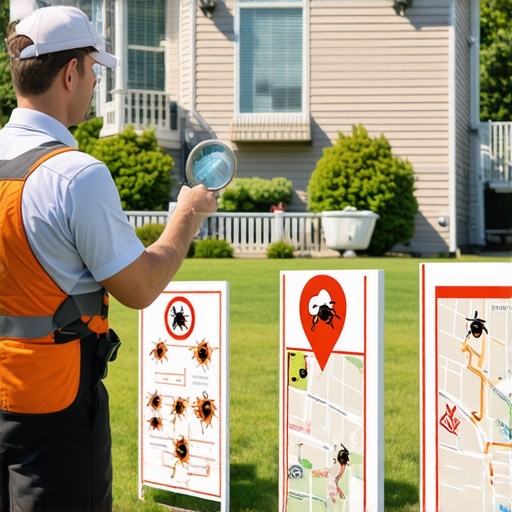
Why Local SEO for Pest Control Usually Fails to Catch the Right Leads
As a Marketing Specialist at Accurate Termite and Pest, I have seen the same story play out dozens of times. A pest control owner invests thousands of dollars into a “local SEO” package. Six months later, they look at their dashboard and see green arrows pointing up. Impressions are up. Keyword rankings for “pest control near me” are in the top three. But there is a glaring problem: the phone isn’t ringing, or worse, the leads coming in are “tire-kickers” looking for a $29 spray that doesn’t exist.
This is what I call the Visibility Paradox. In the world of local SEO for pest control, being seen is not the same as being hired. Most SEO agencies focus on vanity metrics – clicks and impressions – because they are easy to manipulate and report. However, in our industry, success isn’t measured by how many people saw your Google Business Profile (GBP); it’s measured by how many quarterly maintenance contracts or high-ticket termite treatments you booked.
Section 1: The Visibility Paradox, Ranking vs. Revenue
The core of the problem lies in the disconnect between generic search volume and commercial intent. If you are ranking #1 for “how to get rid of ants,” you might get thousands of visitors, but most of them are DIY-ers who have no intention of hiring a professional. Even location-specific searches can be misleading. For instance, a search for “Scorpion” might be someone looking for biological facts rather than a “Scorpion control service.”
Many businesses fail because they target broad terms that lack “ready to purchase” intent. You can have the most optimized site in the world, but if you aren’t appearing for the specific queries that indicate a pest emergency or a desire for professional prevention, your SEO is essentially a billboard in the middle of a desert. To understand why your efforts might be stalling, you should look into why your shop is not showing up for local searches even with good reviews.
True success in local seo for pest control requires a shift from chasing volume to chasing intent. We need to stop asking “How many people saw us?” and start asking “Who saw us, and what was their problem?”
Section 2: Why “Any Lead” is a Bad Strategy for Pest Control
In the pest control industry, not all leads are created equal. There is a massive difference between an “emergency lead” (e.g., “bees in my bedroom right now”) and a “maintenance lead” (e.g., “best quarterly pest control for spiders”).
Generic local search optimization often casts a net that is far too wide. When you optimize for the broadest possible terms, you attract low-intent price shoppers. These are the callers who spend 10 minutes on the phone only to hang up when they realize you don’t offer a “one-time $50 spray.” This wastes your office staff’s time and lowers your overall ROI.
To fix this, your strategy must involve creating service-specific landing pages. Research from LinkNow suggests that users are significantly more likely to convert when the page they land on matches their exact search query. If someone searches for “bed bug heat treatment,” they shouldn’t land on your general homepage; they should land on a page dedicated to your heat treatment process, equipment, and guarantees. Using specialized local seo tools can help you identify which of these high-intent niches are currently underserved in your specific service area.
By narrowing your focus to high-value services like termite inspections, bed bug remediations, and recurring residential programs, you filter out the low-quality noise and focus your budget on the jobs that actually grow your bottom line.
Section 3: The Google Business Profile Conversion Engine
Your Google Business Profile is no longer just a digital yellow pages listing; it is your primary conversion engine. Many owners stop at the basics: name, address, phone number. But if you want to rank google business profile effectively in a competitive market, you have to go deeper into google business profile optimization.
The Sales Pitch in the Description
According to Townsquare Interactive, many businesses treat the Business Description as a mere formality. This is a mistake. This space is your 750-character sales pitch. Instead of saying “We have been in business since 1998,” try “The only pest control in [City] offering 24-hour emergency termite response and eco-friendly pet-safe treatments.” You are selling a solution, not a history lesson.
Categories and Attributes
One of the most common technical errors is the “Primary Category” choice. If you choose a category that is too broad, you might be competing with national franchises that have million-dollar budgets. Conversely, if it’s too narrow, you miss the main traffic. This is a delicate balance. You might find that a single primary category choice could be tanking your map rank if it doesn’t align with local search behavior.
Furthermore, don’t ignore “Attributes.” In the pest control world, attributes like “Emergency Services,” “Eco-friendly,” and “Veteran-led” are massive trust signals. Lisa Weber, a noted local SEO expert, has pointed out that targeted GBP optimization can increase qualified leads by up to 20% simply by providing the specific details searchers are looking for before they even click “Call.”
To ensure your profile is firing on all cylinders, use a google business profile audit tool to check for missing attributes or inconsistent data that could be confusing Google’s algorithm.
Section 4: Signal Conflicts and the 2026 Ranking Landscape
As we look toward the 2026 ranking landscape, Google’s algorithm is becoming increasingly sophisticated. The old days of “stuffing” keywords into your business name are over. In fact, the “Business Name Keyword Trap” is now one of the fastest ways to trigger a ranking filter or a profile suspension.
Modern ranking is built on three pillars: Proximity, Relevance, and Prominence. However, many pest control companies suffer from “Signal Conflicts.” This happens when your website says one thing, your GBP says another, and your third-party citations (like Yelp or Angie’s List) say a third. This confusion leads to what we call “Proximity Gaps,” where you rank perfectly at your office location but drop off a cliff just two miles away.
If you are struggling to maintain visibility across your entire service area, you are likely dealing with 3 silent proximity gaps killing your 2026 map rank. These gaps occur when Google isn’t confident that you actually serve the outskirts of your territory. Additionally, you must be aware of 3 signal conflicts causing 2026 ranking problems on Google, such as inconsistent NAP (Name, Address, Phone) data or conflicting service hour information across the web.
To improve google maps ranking in 2026, you must ensure that your digital footprint is a cohesive, unified signal of authority. Google wants to see that you are the most relevant and prominent answer to the user’s problem in their specific micro-location.
Section 5: Building Real Authority via Local Backlinks & Citations
To rank higher on google maps, you need more than just a clean profile; you need authority. In the past, SEOs would buy hundreds of generic backlinks from overseas. Today, those links are at best useless and at worst toxic.
For a local service business, “hyperlocal” links are the gold standard. A link from your local Chamber of Commerce, a sponsorship of a Little League team, or a mention in the local neighborhood news site carries ten times the weight of a link from a generic “pest control blog” based in another country. These local signals tell Google that you are a legitimate, trusted member of the community.
When building your authority, focus on 5 specific backlink tactics that build real authority for your local profile. These include local resource pages, community event sponsorships, and strategic partnerships with related local businesses (like real estate agents or home inspectors).
Utilizing local seo ranking tools can help you track how these authority-building efforts translate into map pack movement. Remember, google maps seo is a marathon, not a sprint. Authentic local connections build a moat around your business that generic competitors cannot easily cross.
Section 6: Review Strategy: Quality Over Quantity
We have all seen the competitor with 1,000 reviews who somehow still ranks below a company with 150 reviews. This is because Google’s “Natural Review Strategy” filters out reviews that look manufactured or lack substance. Having 500 “Great job!” reviews doesn’t help your google business profile ranking as much as you think.
Google’s AI now analyzes the sentiment and the keywords within reviews. If a customer writes, “Accurate Termite and Pest did a great job with our termite inspection in Scottsdale,” that review is a massive ranking signal for both the service and the location. This is why you must encourage keyword-rich descriptions from your customers.
However, you must be careful. If you get 20 reviews in one day and then none for a month, Google’s spam filters will likely “ghost” those reviews, meaning they are visible to the user but don’t count toward your ranking. To avoid this, implement 7 ways to get Google reviews that don’t get filtered as spam. The goal is a steady, natural pulse of high-quality feedback that mentions your specific services and service areas.
Section 7: Conclusion & Action Plan
The reason local seo for pest control fails is rarely a lack of effort; it’s a lack of alignment. If your SEO strategy is focused on “clicks” while your business needs “contracts,” you will always be disappointed with the results. To turn your GBP into a google maps lead generation machine, you must bridge the gap between being visible and being relevant.
Your first step should be to move away from vanity metrics and toward technical precision. Stop guessing why your phone isn’t ringing and start looking at the data. I highly recommend you identify the specific data errors pulling down your local map rank immediately. Once you fix the underlying technical conflicts, your authority-building and review strategies will finally have the impact they deserve.
About the Author: Mark Quesada is a Marketing Specialist at Accurate Termite and Pest. With years of experience in the trenches of the pest control industry, Mark specializes in converting local search visibility into tangible business growth. He focuses on technical SEO strategies that prioritize high-intent lead generation over simple traffic metrics.