The night the roofing leads died
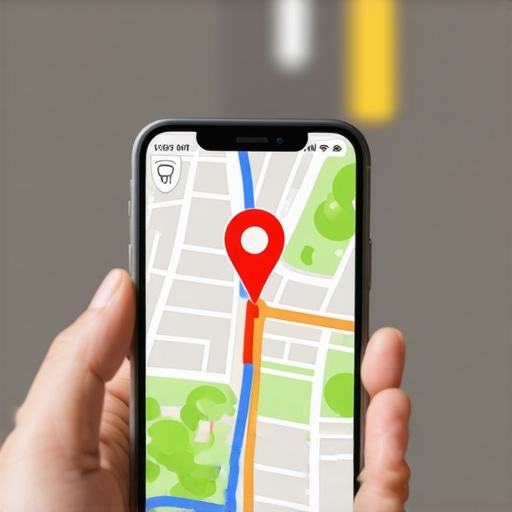
A top-ranking roofing company vanished from the Map Pack overnight because a single mismatched phone number in their Local Services Ads verification tier killed their organic trust score. Everyone wondered why. I found the problem in the secondary verification layer. Google saw two truths. It decided neither could be trusted. This was a centroid collapse. The pin did not just move; it disintegrated in the eyes of the spatial database. The business owner was frantic. They had spent thousands on ads while their organic foundation was rotting from a data mismatch. I had to audit every single GPS coordinate associated with their digital footprint to find the glitch. It was not a keyword issue. It was a logistics failure. The dispatch data did not match the physical beacon. This is the reality of the local algorithm. It is a mathematical weight of proximity and behavioral signals. If your data is not surgical, you are invisible. You cannot hide a bad address from a system that tracks millions of mobile devices every second. The system is designed for efficiency. It hates wasted travel time. It wants to show the most reliable, closest result. When that trust breaks, the ranking follows. We spent weeks using the diagnostic stack we use to rescue falling map pins to rebuild the trust signal from the ground up.
The three mile radius that determines your revenue
Local search visibility relies on a distance-weighted signal where the physical location of the user mobile device is the primary ranking factor. This is the microscopic reality of the local algorithm. Every search starts with a coordinate. The algorithm draws a polygon. It looks for businesses within that shape. If you are outside the radius, your relevance drops to zero. Agencies often ignore the physics of the map. They talk about keywords. They forget about distance. We call this the Vicinity effect. It is a filter. It removes businesses that are too far away even if they have more reviews. The algorithm calculates the travel time for the consumer. It looks at traffic patterns. It looks at historical check-in data. If your pin moves backwards, it is often because Google has refined the radius. Your business might be seen as less accessible than it was yesterday. We use the tracking software that actually shows your real neighborhood dominance to see these shifts in real time. It is about the flow of human traffic. If people are not physically visiting your location, your proximity beacon weakens. The system tracks the ‘stop’ time of devices. It knows if a customer actually entered your store or just drove past. This behavioral data is the silent killer of rankings. You cannot fake a physical visit. You cannot trick a GPS satellite. This is why low map rank fix proven strategies must focus on real-world signals rather than just digital fluff.
“Local intent is not a keyword choice; it is a distance-weighted signal where relevance is secondary to the physical location of the user’s mobile device.” – Map Search Fundamental
The cleanup process for legacy footprints
Old business data and mismatched phone numbers create a fragmented identity that triggers a trust penalty in Google local search database. You might have moved three years ago. The internet does not forget. Your old address is still sitting on a forgotten directory. This is a ghost in the machine. Google sees two locations for one brand. It gets confused. It pushes your pin backwards to protect the user. We see this often with multi-location brands. One manager changes a suite number. The whole regional ranking drops. This is why why fragmented business data is the number one reason you dont rank is a required study for any owner. You must be a data hygienist. You must hunt down every mention of your brand. You need to ensure the Name, Address, and Phone number are identical. Even a comma matters. A missing suite number is a red flag. The algorithm is looking for reasons to exclude you. Do not give it one. We use specific tools we use to audit google maps categories and keywords to ensure the intent matches the location. If you are ranking for the wrong terms in the wrong city, you are wasting resources. The logistics of the map require precision. You are a dispatcher of information. If the dispatch is wrong, the truck never arrives. The customer goes to the competitor. It is cold. It is mathematical. It is the law of the local ecosystem.
The hidden danger of competitor spam attacks
Malicious competitors often use fake reviews and VPN-based location spoofing to dilute your local authority and steal your map pack position. I have seen it happen a hundred times. A local shop is doing well. Suddenly, twenty 1-star reviews appear. The reviews come from accounts that have never been to the city. This is an attack on your sentiment score. Google uses sentiment as a proxy for quality. If the sentiment drops, the pin moves back. You must be vigilant. You have to monitor your profile daily. If you see a spike in suspicious activity, you need how to defend your map rank against aggressive competitor attacks strategies ready to deploy. It is a war of attrition. You report the spam. You provide the evidence. You show the VPN patterns. Sometimes, competitors will even suggest ‘edits’ to your listing. They will try to change your phone number or mark you as permanently closed. If you do not catch it, the algorithm accepts the change. Your phone stops ringing. Your leads dry up. It happens while you sleep. The smell of exhaust and old coffee is my constant companion while I audit these attacks. I look for the anomalies. I look for the scripts. We use the advanced toolkit for monitoring google business profile changes to stop these attacks before they take root. You have to be faster than the spammer. You have to be more precise than the algorithm.
“Relevance in the local pack is a function of historical behavioral data and verified proximity, not just textual matching on a landing page.” – Vicinity Algorithm Research
The Local Authority Reading List
- Stop blindly guessing the data points that matter
- How scripts can tank your local SEO
- Effective tools for multi-location analytics
- The essential map optimization checklist
- Is your software hurting your map rankings
Stability after a service area expansion
Expanding your service area too quickly without establishing physical trust signals often leads to a hard suspension or a total ranking loss. You cannot just check a few more boxes and expect to rank fifty miles away. The algorithm knows where your home base is. It knows where your trucks are. If you claim to serve an area where you have no historical footprint, you are flagged as a spammer. This is a common mistake. Owners get greedy. They want more leads. They expand the radius in the GMB dashboard. The system sees the change. It looks for proof. It finds nothing. No reviews from that city. No local citations. No geo-tagged photos. The pin moves backwards. Sometimes, it disappears entirely. You need how to stop the ranking rollercoaster after opening a new office to do it right. You need to build a presence in each new zone. It is about logistics. You need to dispatch real value into those neighborhoods. You need photos of your team working in those specific zip codes. You need mentions from local news or community blogs. You need to prove you are physically there. If you are a mobile service business, you are under even more scrutiny. Google hates ‘lead generation’ sites. It wants real people in real vans. We focus on the reinstatement blueprint for service area businesses when things go wrong. It is a slow process of rebuilding trust. You cannot rush the algorithm. It is a machine of habit. It likes consistency. It likes data that matches the map.
The logic of the primary category shift
Choosing the wrong primary category on your business profile can immediately disconnect your listing from the local search intent of your target customers. This is the most powerful lever you have. It is also the most dangerous. If you change it today, your rank will fluctuate tomorrow. The system re-evaluates your entire identity. If you pick ‘Contractor’ instead of ‘Plumber,’ you are competing in a different pond. You need to know what the leaders in your city are using. We use how we found the best primary categories using specific search tools to make these decisions. It is not a guess. It is a data-driven choice. The algorithm maps categories to specific user intents. If a user searches for ’emergency leak repair,’ it looks for ‘Plumber.’ If you are listed as ‘Home Improvement,’ you are second tier. You are a backup. Your pin moves to the second page. People do not scroll to the second page. They click the top three. The top three are the businesses that have optimized their category for the highest volume intent. We often see a massive drop after a category change. This is the ‘re-indexing’ period. It is stressful. You must stay the course. You must ensure your website content matches the new category perfectly. If your site says one thing and your map says another, the trust signal breaks. You need to align the two. This is how you win. This is how you stabilize the pin. The math of the map pack is unforgiving but predictable. If you provide the right signals, you get the rank. If you fail the logistics, you stay in the shadows. It is time to audit your category. It is time to fix the mismatch. The leads are waiting for the most reliable signal. Be that signal.