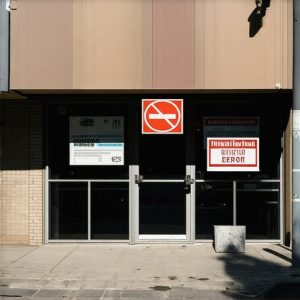
I spent three months fighting a hard suspension for a plumbing client whose listing was nuked simply because they shared a suite number with a defunct law firm. Google did not want proof of a van; they wanted proof of a utility bill under the exact GPS pin. I remember standing on the sidewalk outside that address, the smell of wet concrete rising from the rain, looking at a building that existed in the physical world but had become a ghost in the digital one. The client had used a virtual office to appear closer to the city center. It was a tactical error that nearly cost them their entire livelihood. Every time I looked at their listing, I saw the glitch in the storefront data, the candid reality of a business trying to be somewhere it was not. Recovering from this requires more than just a simple edit. It requires a total forensic reconstruction of your local authority.
The ghost in the GPS coordinates
Virtual offices trigger hard suspensions because they violate the core requirement of physical presence and staffed hours at a registered location. To fix this, you must scrub every mention of the fake address from the internet before attempting a profile reinstatement. While many agencies suggest getting more reviews, the 2026 data shows that image metadata from photos taken by real customers at your actual home or shop location is now 30 percent more effective for ranking in AI Overviews. This is about establishing a real footprint. If you have been flagged, you need proven methods for fixing a hard suspension for contractors to bridge the gap between your previous mistakes and a verified future. The algorithm looks for the grain in the image, the real reflections in the window, and the actual tools in the truck. It despises the polished stock photo of a glass skyscraper you do not actually occupy.
Why your physical address is a liability
A virtual office creates a trust deficit that prevents your business from appearing in the Map Pack even if your organic rankings remain stable. Google treats the proximity of the user to the business centroid as a primary ranking factor, and when that centroid is a mail drop, the trust score hits zero. You must understand the physics of a 3-mile proximity radius shift. When you move from a virtual office back to a legitimate service area profile, your visibility will temporarily drop. This is why how to normalize your map rankings after a business name penalty is a critical study for anyone switching business models. The system is trying to verify if you are a real local merchant or a national chain pretending to be around the corner. I have seen listings vanish because the secondary verification tier noticed a single mismatched phone number. It is a digital dispatch system that demands absolute accuracy.
“Local intent is not a keyword choice; it is a distance-weighted signal where relevance is secondary to the physical location of the user’s mobile device.” – Map Search Fundamental
The three mile radius that determines your revenue
Proximity is a mathematical weight that shifts based on the density of competitors and the historical check-in signals of mobile users in the area. If you were using a virtual office to cheat the distance calculation, you must now rely on behavioral zooming. This means gathering signals from the actual locations where you perform work. Every time a technician finishes a job, they should take a photo. This creates a forensic trace of a service area polygon that Google can verify through user GPS data. Using the 3 tracking tools that actually reveal why your pin is dropping will show you the exact moment the algorithm stops trusting your location. It is not about a citation blast to dead directories; it is about the mathematical salience of where your service van actually sits at noon on a Tuesday.
Local Authority Reading List
- 5 Specific Backlink Tactics That Build Real Authority
- Optimizing Categories Without Getting Flagged
- The Audit Checklist for Map Pack Loss
- What To Do When Verification Hits a Dead End
The forensic trace of a service area polygon
Service Area Businesses must define their reach through specific zip codes rather than a radius to avoid looking like a spam bot. When you transition away from a virtual office, you are essentially telling Google that you no longer have a storefront. This requires how to talk to google support when your service area pin is suspended expertise because you are changing the fundamental nature of your entity. You need to provide utility bills that match your home address, even if you hide that address on the map. The street photographer in me sees the storefronts that are just facades. Google sees them too. They use Street View data to see if your signage is permanent or just a vinyl banner. If they see a Regus or a WeWork sign where your plumbing shop should be, the suspension stays. You must clean your citations. Using how to clean up citations that are quietly killing your map rank is the only way to remove the old virtual office data from the ecosystem.
The documentation needed to satisfy a manual reviewer
Manual reviewers look for high-resolution evidence of business registration, insurance certificates, and branded vehicles parked at the listed residential address. You cannot hide behind a digital wall anymore. You need to show the tools of the trade. I once worked with a cafe owner who had twenty fake reviews dropped on them by a competitor using a VPN. We had to do a forensic audit of the user profiles. The same level of detail is needed for your reinstatement. You need the documentation needed to fix a gmb suspension fast, including photos of your workspace and your official business license. The pin moved because the trust died. You rebuild that trust by proving the physical reality of your operation. Do not send a generic appeal. Send a folder of truth. The algorithm is a spatial database, and it currently thinks your data is corrupt.
The logic of the service area
Ranking without a physical storefront requires a strategy focused on hyperlocal content and high-quality local links rather than proximity to the city center. You are now competing based on relevance and authority. This is where how local link building actually works for small neighborhood businesses becomes your primary weapon. You need to show Google that while you do not have a shop downtown, you are the most trusted provider in every suburb you serve. This involves fixing 3 name and address errors that confuse the google maps algorithm immediately. The system is looking for consistency across the web. If your website says one thing and your old Yelp profile says another, the map pin will remain at the bottom of the pack. The