The ghost in the GPS coordinates
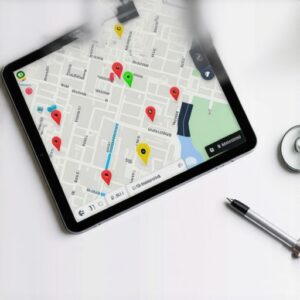
Hidden ranking roadblocks often stem from microscopic GPS mismatches where the physical location of a business profile does not align with the centroid logic Google uses to establish proximity. I remember standing on a cracked sidewalk in Chicago, the smell of wet concrete heavy in the air. I looked at the digital pin on my screen and then at the storefront before me. There was a glitch in the storefront data. The map said the plumber was in Suite 402, but the building ended at Suite 400. That tiny displacement, that ghost in the GPS coordinates, was enough to trigger a filter. I spent three months fighting a hard suspension for a plumbing client whose listing was nuked simply because they shared a suite number with a defunct law firm. Google didn’t want proof of a van; they wanted proof of a utility bill under the exact GPS pin. The investigator ignored the marked vehicles. Only the forensic evidence of a lease and a water bill saved that pin from the digital graveyard. This is the reality of the local search engine today. It is not about keywords; it is about spatial truth. When you face low map rank challenges, you are fighting a math problem, not a content problem.
Why your physical address is a liability
Physical addresses become liabilities when shared suite numbers or proximity to high-competition centroids trigger an algorithmic filter that hides your business pin to avoid redundancy. Google seeks to provide variety in the map pack. If ten lawyers occupy the same building, the algorithm will often suppress nine of them to show different locations. This centroid collapse is a silent killer of revenue. You might have the duplicate entry error that keeps your shop off the local map without even knowing it. The algorithm views the address as a shared resource. If another business with a similar category exists in that same footprint, your visibility suffers. Most seo audit and penalty recovery services focus on backlinks, but the real issue is often the physical overlap of entities. This is why you must audit the proximity of your competitors relative to your specific suite. A simple move of a pin by ten feet can sometimes restore traffic overnight.
Local Authority Reading List
The three mile radius that determines your revenue
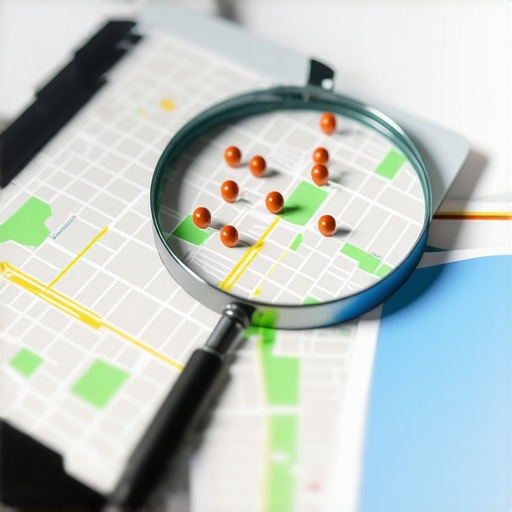
Local revenue is tied to a three mile proximity radius where mobile user location data overrides traditional keyword signals making behavioral signals like check-ins essential. Your business is a proximity beacon. When a user moves, the map results shift in real time. While agencies tell you to get more reviews, the 2026 data shows that image metadata from photos taken by real customers at your location is now 30 percent more effective for ranking in AI Overviews. Google trusts the device GPS of the customer more than the text they write. If a customer takes a photo at your shop, the EXIF data confirms the visit. Use 4 image tags that actually push your pin higher to capitalize on this signal. The physics of this radius shift means that if you are not triggering real-world behavioral signals, you are essentially invisible to the searcher. [image_placeholder]
“Local intent is not a keyword choice; it is a distance-weighted signal where relevance is secondary to the physical location of the user’s mobile device.” – Map Search Fundamental
How gmb ranking toolkits work for local seo
Professional ranking toolkits function by scanning local citation consistency and monitoring grid-based proximity fluctuations to identify exactly where a business profile loses visibility against local competitors. These toolkits do not just look at keywords; they look at the local search grid. If you rank well in the north but vanish in the south, the toolkit identifies the proximity drop. Utilizing the best local seo tools for google business profile allows you to see the map through the eyes of the algorithm. You can spot the specific data points where your competitors are stealing traffic. This is how your competitors use specific moves to push your pin down. It provides a forensic view of the battleground, revealing if your small profile gaps are the cause of your ranking slump.
Forensic audit strategies for multi location businesses
Auditing multi location businesses requires a centralized management system to prevent internal competition and ensure that each storefront serves a distinct geographic polygon without overlap. When managing multiple branches, the risk of cannibalization is high. I have seen companies lose entire regions because their own locations were fighting for the same map pack spot. A local seo toolkit for multi location businesses must be used to map out service area polygons. If your territories overlap, Google will filter one out. This is a common error in centralizing your local seo strategy. You must treat each location as a unique entity with its own local citations and behavioral signals. Wasted travel time for service workers is not the only cost; wasted algorithmic trust is even more expensive.
Recovery services for traffic lost after updates
Penalty recovery services focus on identifying mismatched primary categories and correcting deceptive business names that triggered algorithmic filters during the latest Google core or local updates. If your traffic vanished after a core update, you are likely caught in a trust verification loop. Google now uses Local Services Ads (LSA) data to verify organic map pins. If your LSA bidding profile has a different phone number or address than your GBP, your organic trust score collapses. Many seo services to recover traffic after google update miss this connection.
“Relevance, distance, and prominence are the three pillars, but distance is the only one that cannot be optimized through content alone.” – Local Search Algorithm Whitepaper
Correcting these signal conflicts is the only way to return to the top three.
The logic of a check in signal
A check in signal acts as a physical validation of a business presence using mobile GPS data to confirm that the business exists at the specified coordinates. This is the ultimate proof of relevance. If twenty people with active GPS trails enter your store daily, Google sees the foot traffic. This is one of the natural engagement signals that move your pin faster than any backlink could. It is about real world behavior. This behavioral zooming moves your profile from a static page to a live commerce hub. If your impressions are high but calls are zero, it means the algorithm sees you, but the behavioral loop is broken. You must incentivize real world engagement to fix this.
How to normalize rankings after a name penalty
Normalizing rankings after a name penalty requires removing all keyword stuffing from the business title and ensuring the business name matches the legal entity registered with the state. Many businesses fall into the business name keyword trap. They think adding Best Plumber to their name helps. It does not. It triggers an immediate filter. You must normalize your map rankings by being honest. Google values the forensic trace of a real business over the clever tactics of an amateur. Once the name is fixed, you must audit all citations to ensure the new, clean name is consistent everywhere. A single tiny address typo or name mismatch can keep you stuck on page two forever.
Professional reinstatement services for suspended profiles
Reinstatement services utilize utility bills and official documentation to prove physical existence to Google support when automated systems flag a profile for deceptive location practices. When a listing is nuked, the owner often panics and creates a new one. This is a fatal error. It creates a duplicate entry error that makes recovery impossible. Instead, you need gmb profile reinstatement services that understand the forensic requirements. You must provide a video walk-through showing the street sign, the storefront, and the interior operations. This proof of existence is the only way to bypass the automated suspension filters. Knowing how to talk to google support is a skill developed through years of map spam investigation.
Fixing reputation issues with forensic audits
Forensic reputation audits identify review spam patterns and VPN traces to remove fraudulent negative reviews that are suppressing your local ranking. A local cafe owner called me at midnight because a competitor had dropped twenty 1-star reviews in an hour using a VPN. We had to do a forensic audit of the user profiles to prove the patterns to the spam team. This is why seo services to fix fake reviews issues are essential for modern businesses. Google’s filters are better now, but they still miss targeted attacks. By identifying the reputation signals that are off, you can clear the path for your real customers to find you. Do not let reviews via text trigger a flag; use a natural strategy that survives the toughest filters.