The Reason Most Real Estate Agents Fail to Rank for Specific Neighborhoods
For years, the “Neighborhood Expert” was defined by the agent with the most lawn signs or the biggest face on a park bench. Today, that title is won or lost on a six-inch smartphone screen. However, despite investing thousands in professional photography and high-end websites, most real estate agents are invisible where it matters most: the Local Map Pack. If you’ve ever wondered why a competitor with fewer reviews and a worse website is outranking you for a specific suburb, you are likely a victim of poor google business profile seo. The hard truth is that the traditional “neighborhood expert website” is dead for solo agents who don’t understand how the modern local algorithm works. In my 9+ years as an SEO consultant, I have seen brilliant agents fail to gain traction because they are fighting against technical filters they don’t even know exist.
The Proximity Trap: Why Your Office Location is Your Biggest Hurdle
The single most influential factor in your google business profile seo is a factor you often cannot change: physical proximity. Google’s primary goal is to provide the most relevant, local result to the user. If a potential homebuyer is standing in the heart of “Willow Creek” and searches for a “real estate agent near me,” Google’s algorithm will prioritize businesses physically located within or nearest to that specific neighborhood boundary.
This creates what I call the “Proximity Trap.” Many agents have their main office in a high-traffic downtown area or a central business district. While this is great for general city-wide searches, it makes ranking for a specific neighborhood ten miles away an uphill battle. You must understand that proximity doesn’t guarantee a ranking, but being too far away acts as a silent killer for your visibility. Even if you have 500 five-star reviews, Google may still favor a “neighborhood office” with only 10 reviews because that office is 500 feet from the searcher.
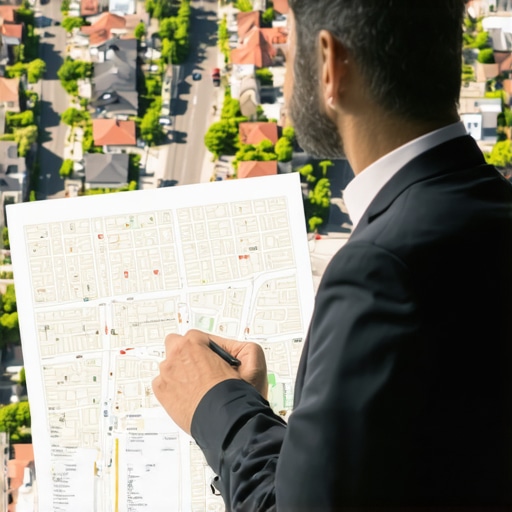
To overcome this, agents often try to “game” the system by using virtual offices or P.O. boxes, which leads to immediate suspension. Instead, you need to prove your relevance through other signals. Using a google maps ranking service can help you visualize exactly where your ranking “drops off” as you move away from your office. This heat-map data is essential for identifying which neighborhoods are actually within your reach and which ones require a more aggressive, content-heavy local seo for real estate strategy to bridge the distance gap.
The SAB vs. Hybrid Setup: The Technical Error Killing Your Visibility
One of the most common technical errors I see in google business profile seo is the incorrect classification of the business type. Many solo agents work from home and, understandably, do not want their home address visible to the public. They set themselves up as a Service Area Business (SAB), which hides the address and defines the business by the areas it serves.
However, in the competitive world of hyperlocal seo, SAB profiles are often at a disadvantage compared to physical office locations. Google’s algorithm relies on “entity confidence.” A physical office with a verified address, permanent signage, and staff present during business hours provides a much stronger signal of legitimacy than a hidden home address. Google’s own guidelines state: “If customers can’t walk into your location… you must remove your address.” While following this keeps you compliant, it also limits your “ranking power” in the Map Pack.
For real estate, a physical office or a “Hybrid” setup is the gold standard for google business profile optimization. A hybrid profile shows your address but also specifies a service area. If you are part of a larger brokerage, ensure your individual practitioner profile is correctly linked to the physical office location. If you are a solo agent working from home, you are essentially fighting with one hand tied behind your back in the Map Pack. You must compensate for this lack of a physical “pin” by doubling down on localized reviews and neighborhood-specific entity signals that prove you are active in that area despite not having a storefront there.
Why Your “Neighborhood Guides” Aren’t Moving the Map Pin
Most real estate agents have been told to “write content” to improve their SEO. They dutifully create neighborhood guides, lists of the “Top 10 Coffee Shops in [Neighborhood],” and market reports. Yet, they see zero movement in their Google Maps ranking. Why? Because these guides are often “islands” on their website that have no technical connection to their Google Business Profile.
The reason geo-specific landing pages often fail to trigger a Map Pack move is a lack of local entity signals. To Google, a blog post about a neighborhood is just text. To make it a ranking signal, that content must be linked to your GBP through “Local Justifications.” These are the small snippets of text you see in search results that say “Their website mentions [Neighborhood Name].”
Furthermore, agents fail to use google maps ranking tips such as embedding a customized Google Map on their neighborhood pages or linking their GBP “CID” link directly within the content. Without these technical bridges, your neighborhood guides are just helping your organic search ranking (where you are likely being crushed by Zillow and Realtor.com anyway) rather than helping you win the Map Pack. I recommend using local seo software to track how specific content updates correlate with shifts in your local grid rankings. If a new neighborhood guide doesn’t result in your pin moving higher in that specific zip code, your content-to-GBP connection is broken.
The 2026 Algorithm Shift: Engagement Over Citations
As we look toward the future, the traditional pillars of SEO are shifting. For years, “citations” (having your name, address, and phone number on various directories) were the backbone of local ranking. Today, citations have become “table stakes” – everyone has them, so they no longer provide a competitive edge. The 2026 Google Maps algorithm shifts indicate a massive move toward user behavior and engagement signals as the primary ranking factors.
Google is now looking at how users interact with your profile. Do they click the “Call” button? Do they request directions? Do they spend time looking at your photos? Most importantly, do they search for your name specifically after seeing your profile? These are “high-intent” signals that tell Google you are the most relevant authority in that area.
To get more calls from google maps, you need to treat your profile like a social media feed. This means regular “Google Updates” (posts), high-quality neighborhood-specific photos, and responding to every review with localized keywords. If your profile is static, Google assumes your business is stagnant. In 2026 and beyond, the “Local Map Pack SEO” winner will be the agent who generates the most “dwell time” and interaction on their profile, not just the one with the most backlinks.
Common Pitfalls: From Keyword Stuffing to Ghosted Pins
In a desperate attempt to rank, many agents fall into the business name keyword trap. They change their business name from “Jane Doe Realty” to “Jane Doe – Best Real Estate Agent in Beverly Hills.” While this might provide a temporary boost, it is a high-risk strategy that often triggers an immediate ranking filter or a permanent suspension.
Google’s “Possum” algorithm filter is designed to prevent the Map Pack from being dominated by the same business or businesses that look too similar. If three agents in the same office all try to use the same keywords in their titles, Google will often “ghost” two of them, showing only one to the user. This is why you might see your profile in the search results one day and find it completely gone the next, even if you haven’t been suspended.
Another pitfall is the “Ghosted Pin” caused by duplicate data. If your old brokerage address is still floating around on the web, it creates a conflict in Google’s database. Using a google business profile audit tool is essential to find these “ghosting” errors and cleanup your digital footprint. In my experience, 40% of ranking issues for real estate agents are caused by outdated information from a previous brokerage that is confusing Google’s proximity filters.
The Path Forward: How to Dominate a Neighborhood Without an Office There
So, how do you win the neighborhood if your office is across town? You must rank google business profile through authority and relevance rather than just proximity. This requires a three-pronged strategy:
- Hyperlocal Reviews: Stop asking for generic reviews. Ask your clients to mention the specific neighborhood or street name in their review. “Jane helped us buy our dream home in Silver Lake” is worth ten times more than “Jane is a great agent.”
- Local Backlinks: Get links from local neighborhood associations, school blogs, or local charities. These links act as “geographic vouchers” for your business.
- Geo-Tagged Media: Upload photos of you at local neighborhood landmarks, parks, or open houses within your target area. Ensure the metadata or the “Alt Text” reflects the neighborhood name.
Local SEO is not a “set it and forget it” task. It is a continuous process of proving to Google that you are the most active and engaged professional in a specific geographic circle. If you are tired of being outranked by agents who don’t work as hard as you do, it’s time to stop guessing and start auditing. Check your profile immediately to see if you are being “ghosted” by proximity filters or if your technical setup is holding you back. I encourage you to visit the website to explore specialized tools that can help you rank higher on google maps and finally claim the title of neighborhood expert.